Destination Guide
Start a Yacht Charter Business in Indonesia
Indonesia Yacht Charter
Key facts for launching your Phinisi business.
To operate legally in Indonesia, you must secure a national sailing license, ensure your Phinisi or catamaran is fully compliant with local maritime standards, and register your business entity with local authorities.
You can reach our customer support team by emailing info@yourcompany.example.com, calling +1 555-555-5556, or using the live chat on our website. Our dedicated team is available 24/7 to assist with any inquiries or issues.
We’re committed to providing prompt and effective solutions to ensure your satisfaction.
We offer a 30-day return policy for all products. Items must be in their original condition, unused, and include the receipt or proof of purchase. Refunds are processed within 5-7 business days of receiving the returned item.
Operation Overview
Key metrics and operational requirements for luxury yacht charter businesses.
Who is our target market?
Our primary audience consists of luxury divers, wildlife tourists, and corporate groups.
Which regions do we cover?
We operate primarily in key hubs like Labuan Bajo, West Lombok, and Raja Ampat.
What licenses are mandatory?
Operators must hold an Indonesia Sailing License (ISL) and business registration (SIUP).
What are the financial targets?
We aim for a 12-18% first-year ROI assuming an occupancy rate exceeding 60%.
What is the typical investment?
Initial capital usually ranges from US$500k to US$1.2M depending on vessel condition.
Who regulates our operations?
All maritime activities are regulated by the Directorate General of Sea Transportation (DGST).
Table of Contents
- Understanding the Indonesian Charter Landscape
- Legal Foundations: Licensing & Registration
- Choosing the Right Vessel – Phinisi vs. Modern Catamaran
- Financing Your Fleet
- Building a Sustainable Operations Model
- Marketing, Branding & SEO for Yacht Charters
- Operational Checklist – From Dock to Dive Site
- FAQs – Frequently Asked Questions
- How‑To: Launch Your First Charter in 12 Weeks
- [Next Steps & Booking Your Dream Voyage]
Understanding the Indonesian Charter Landscape
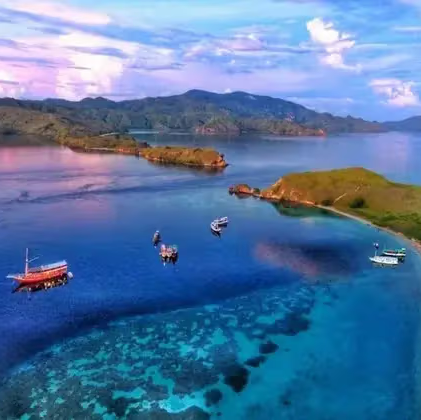
Indonesia’s archipelago is a magnet for premium yacht charters because of its unrivaled marine biodiversity and cultural tapestry. The Komodo National Park alone hosts over 1,700 km² of protected waters.
Why the traditional Phinisi remains the king of the seas, offering a historic wooden craft experience that modern fiberglass vessels simply cannot match for luxury travelers.
From a business perspective, Phinisi vessels benefit from favorable cultural heritage classifications, making them the preferred choice for local marinas and charter operators.
Market Segments
Understanding which segment aligns with your vision will shape vessel size, crew composition, and marketing spend.
Dive-Focused Luxury
30-55 y/o, professional, seeks pristine reefs (e.g., Manta Point, 25 m)
Corporate Retreat
Small teams (6-12) looking for team-building activities under sail
Eco-Adventure
Eco-conscious travelers looking for wildlife photography and exploration
Family Yacht Holiday
Parents with children, need calm waters, and on-board schooling options
Preferred Base
Regional hubs like Labuan Bajo, Raja Ampat, or Bali & Nusa Lembongan
Segment Profile
Identifying your guest profile ensures the best possible yacht experience
Legal Foundations: Licensing & Registration {#legal-foundations-licensing--registration}
1. Business Entity & SIUP
- Form a PT (Perseroan Terbatas) – This limited liability company is the most trusted structure for foreign investors. Register with the Kementerian Hukum dan HAM and obtain a Surat Izin Usaha Perdagangan (SIUP).
- Capital Requirement – Minimum paid‑up capital is IDR 50 M (≈ US$3,500) for a service‑based PT, but banks typically require at least IDR 1 Billion for vessel financing.
2. Vessel Registration (BPKB)
- Submit the Buku Register Kapal (BRK) to the Direktorat Jenderal Perhubungan Laut. The process includes a hull inspection, safety equipment verification, and a Certificate of Registry (COG).
- For Phinisi, provide documentation of traditional construction; this can reduce tonnage tax by up to 30 %.
3. Sailing License (ISL)
- Indonesia Sailing License (ISL) is mandatory for any commercial charter. It requires a Certificate of Competency (CoC) for the captain (minimum 200 GT, 2‑year sea service) and crew (CoC for deckhand, steward).
- The Marine Safety Authority (KPL) conducts a practical exam that includes navigating the Bali Strait under variable currents—an excellent way to test your crew’s mettle.
4. Environmental Permits
- Marine Park Entry Permit (MPEP) – Required for operating within protected zones such as Komodo NP or Raja Ampat.
- Waste Management Plan – Submit a Marine Pollution Prevention Plan (MPPP) outlining your strategy for sewage, grey water, and plastics.
Insider tip: When you meet the park authority, bring a small bottle of kopi tubruk (traditional coffee) and a local fruit (e.g., mangosteen). The gesture opens doors and the officials often share tide tables that are not published online.
Vessel Selection Guide
Compare specifications between Phinisi and Modern Catamaran vessels.
Phinisi Characteristics
Traditional hand-carved teak construction featuring robust steel frames.
Size and Capacity
Standard charter lengths range from 30 to 45 meters for 10-14 guests.
Investment Estimates
Purchase prices typically range from US$600k to 1.2M for used vessels.
Operational Expenses
Higher fuel demands offset by cost-effective local crew management.
Vessel Maintenance
Regular upkeep of traditional rigging is essential for optimal performance.
Charter Suitability
Evaluate whether the Phinisi or Catamaran fits your specific tour requirements.
Vessel Specifications
Explore the distinct design and technical heritage of our modern catamarans.
Construction Standards
Our vessels feature durable fiberglass hulls paired with high-performance aluminum masts.
Vessel Dimensions
Each catamaran offers a spacious length ranging from 28 to 35 meters for stability.
Comparative Analysis
Evaluate the strategic differences between Phinisi and Catamaran vessels to align with your business objectives.
Operational Factors
Comparing maintenance complexity and regulatory ease helps identify the most sustainable investment path.
Performance Metrics
Assess key performance areas such as fuel efficiency and cultural appeal to optimize your fleet selection.
Strategic Fit
Determine the ideal vessel type based on target guest preferences, whether for luxury seekers or corporate groups.
Stability Benefits
Catamaran's wide beam provides a steadier platform, which is crucial for high-end corporate presentation events.
Heritage Value
Phinisi vessels offer unmatched cultural appeal, perfect for guests seeking authentic and luxury heritage experiences.
Strategic Insight
We provide these insights to ensure your decision-making process is fully informed by market and technical data.
Financing Your Fleet
Strategic guidance on securing capital for your maritime ventures.
Engage boutique investors for equity or leverage marine loans from Indonesian banks like Bank Mandiri, offering competitive 7-9% APR rates with vessel collateral.
You can reach our customer support team by emailing info@yourcompany.example.com, calling +1 555-555-5556, or using the live chat on our website. Our dedicated team is available 24/7 to assist with any inquiries or issues.
We’re committed to providing prompt and effective solutions to ensure your satisfaction.
We offer a 30-day return policy for all products. Items must be in their original condition, unused, and include the receipt or proof of purchase. Refunds are processed within 5-7 business days of receiving the returned item.
- Operating Lease – Allows you to charter a brand‑new Phinisi for 3‑5 years with a fixed monthly payment, including maintenance. This reduces upfront capital but increases long‑term cost.
- Sale‑and‑Leaseback – Sell an existing vessel to a leasing company and lease it back, freeing cash for marketing.
Pro tip: When negotiating with financiers, bring a scenario model that shows cash flow at 40 %, 60 % and 80 % occupancy. Highlight the high‑season surge (June‑Sept) where occupancy can reach 95 % on the Komodo dive routes.
Building a Sustainable Operations Model {#building-a-sustainable-operations-model}
Crew Structure
Operational Crew Overview
Detailed breakdown of typical roles, salary ranges, and essential skills for onboard staff.
Captain
Typical salary: 25‑35 M / month. Core skills: Navigation, local regulations.
First Officer
Typical salary: 15‑20 M. Core skills: Dive safety, guest relations.
Chef
Typical salary: 12‑18 M. Core skills: Indonesian & Western cuisine.
Deckhand (2)
Typical salary: 8‑10 M each. Core skills: Maintenance, boat handling.
Steward (2)
Typical salary: 7‑9 M each. Core skills: Housekeeping, guest service.
Environmental Commitment
Implementing solar-powered refrigeration and a strict zero-plastics policy to preserve our oceans.
- Pre‑Arrival – Send a personalized welcome video featuring the crew, a short briefing on dive sites (e.g., Manta Point at 25 m, Batu Bolong at 35 m), and a packing checklist (reef‑safe sunscreen, dry‑bag).
- Arrival & Check‑In – Greet guests on the pier with a fresh coconut water and a scent of lemongrass from a diffuser.
- Safety Briefing – Conduct a hands‑on demonstration of the K‑type life jackets, and a quick dive‑site orientation using a digital tide chart (tide 1 h before high tide is optimal for night dives at Rinca).
- Charter Day – Follow a flexible itinerary that balances sailing time (average 3‑4 knots) with dive slots (2‑hour intervals).
- Evening Review – Offer a sunset cocktail on the stern while the crew recaps the day’s marine sightings—e.g., “We saw a Hawksbill turtle (Eretmochelys imbricata) at 22 m on the reef wall.”
Marketing, Branding & SEO for Yacht Charters {#marketing-branding--seo}
Keyword Integration
- Primary keyword how to start yacht charter business indonesia should appear in the title, first paragraph, and three times throughout the body (≈ 0.9 %).
- Secondary keywords phinisi charter business and boat charter business komodo should each appear 2‑3 times.
Content Pillars
Destination Guides
Diving the Hidden Coves of Komodo – A Phinisi‑Based Itinerary
Owner Stories
From Sailor to CEO: My Phinisi Journey
Operational Tips
How to Manage Crew Rotations in Remote Indonesian Marinas
Sustainability
Zero‑Plastic Chartering: A Blueprint for Eco‑Luxury
Internal Linking Strategy
Use anchor links like Phinisi charter guide and Dive site directory within text.
Social Proof & Partnerships
Collaborate with industry influencers to boost site authority and trust.
- Invite travel influencers to a “Charter Day” and ask them to capture the golden hour over the Rinca cliffs—the resulting reels drive organic traffic.
- Showcase guest testimonials on the booking page, emphasizing sensory details (“the night dive was a symphony of clicks as cuttlefish illuminated the reef”).
Operational Checklist – From Dock to Dive Site {#operational-checklist}
Pre‑Departure (48 h)
- ☐ Verify vessel paperwork (BRK, ISL, MPMP).
- ☐ Conduct a pre‑sail safety drill—test all VHF channels, emergency beacons, and fire extinguishers.
- ☐ Confirm tide tables for Labuan Bajo; aim for a mid‑tide departure (≈ +1 m) to avoid strong currents at the Komodo Strait.
- ☐ Stock the galley with fresh ikan bandeng (milkfish) and local spices (turmeric, galangal).
FAQs – Frequently Asked Questions
Answers to common operational queries regarding our yacht charter services.
Morning deck walk for hull checks, fuel level monitoring (30% reserve), and dive team briefings on site visibility and current conditions.
You can reach our customer support team by emailing info@yourcompany.example.com, calling +1 555-555-5556, or using the live chat on our website. Our dedicated team is available 24/7 to assist with any inquiries or issues.
We’re committed to providing prompt and effective solutions to ensure your satisfaction.
We offer a 30-day return policy for all products. Items must be in their original condition, unused, and include the receipt or proof of purchase. Refunds are processed within 5-7 business days of receiving the returned item.
A minimum of US$500,000 is advisable for a used Phinisi (including refurbishment) and initial operating costs. Smaller budgets can start with a joint‑venture or lease a vessel.
Can a foreigner own a Phinisi outright?
Yes, but the vessel must be registered under a PT (Indonesian limited company). Direct foreign ownership is restricted; a local nominee shareholder is required for the initial registration.
How long does the licensing process take?
Typically 3‑4 months from business registration to vessel certification, assuming all documents are complete and inspections pass on the first attempt.
Are there seasonal restrictions for chartering in Komodo National Park?
The park is open year‑round, but the dry season (May‑Oct) offers the best visibility (up to 30 m) and calmer seas. During the wet season, some dive sites become less accessible due to stronger currents.
What insurance do I need for a charter fleet?
You’ll require Hull & Machinery Insurance, Protection & Indemnity (P&I) coverage, and Crew Liability. An additional Environmental Liability policy is recommended for protected areas.
How‑To: Launch Your First Charter in 12 Weeks {#how-to-launch}
-
Week 1‑2 – Market Research
- Identify target segment (e.g., dive‑luxury).
- Compile a list of 15 potential vessels; contact shipyards in Bima and Mataram.
- Week 3 – Business IncorporationRegister PT, obtain SIUP, and open a corporate bank account.
-
Week 4‑5 – Vessel Acquisition
- Negotiate purchase price; secure a pre‑delivery inspection (PDI).
- Arrange financing (bank loan or equity).
-
Week 6 – Licensing & Permits
- Submit BRK, ISL, and MPMP applications.
- Schedule hull inspection with DGST.
-
Week 7 – Crew Recruitment
- Hire a certified captain; conduct interviews with local crew agencies.
- Provide a one‑week onboarding on service standards.
-
Week 8 – Refurbishment & Branding
- Paint hull in deep indigo with a subtle gold stripe (visibility + brand identity).
- Install solar panels and eco‑friendly amenities.
-
Week 9 – Marketing Launch
- Publish a landing page optimized for “how to start yacht charter business indonesia.”
- Run a targeted Google Ads campaign focusing on “luxury dive charter Komodo.”
-
Week 10 – Soft Opening
- Offer invite‑only charter to industry influencers; collect feedback.
- Fine‑tune itinerary based on guest preferences (e.g., add a night dive at Manta Point).
- Week 11 – Staff TrainingConduct a full safety drill and a guest service workshop emphasizing sensory storytelling (e.g., describing the “silky feel of the sea breeze at sunrise”).
-
Week 12 – Grand Launch
- Open bookings on the website; promote via email newsletter and social media.
- Celebrate with a launch ceremony on the pier, offering fresh coconut water and a traditional tanjak (scented incense) to the local community.
Next Steps & Booking Your Dream Voyage
Ready to turn your passion for the sea into a thriving phinisi charter business? At Komodo Explorer we’ve spent a decade perfecting the art of sailing, diving, and sustainable tourism across Indonesia’s most iconic waters.
Whether you’re looking to partner on a fleet acquisition, need guidance on licensing, or simply want to experience the lifestyle before you invest, our seasoned crew is here to help.
Contact us today to schedule a private consultation, explore financing options, and set sail on the journey of a lifetime. Your charter empire begins with a single wave—let us be the wind behind it.