Destination Guide
Drone Permit & SIMAKSI Komodo 2026: Complete How‑To Guide
Key Facts for Komodo
Essential information regarding permits and regulations for visiting Komodo in 2026.
The SIMAKSI drone permit is the official authorization required to legally fly a drone within Komodo National Park. It must be secured from the Ministry of Environment before your arrival.
You can reach our customer support team by emailing info@yourcompany.example.com, calling +1 555-555-5556, or using the live chat on our website. Our dedicated team is available 24/7 to assist with any inquiries or issues.
We’re committed to providing prompt and effective solutions to ensure your satisfaction.
We offer a 30-day return policy for all products. Items must be in their original condition, unused, and include the receipt or proof of purchase. Refunds are processed within 5-7 business days of receiving the returned item.
Permit Overview
Find essential details regarding the SIMAKSI Drone Permit and regulatory requirements below.
Permit Type & Authority
The SIMAKSI Drone Permit is issued by the Ministry of Environment & Forestry (MoEF) for operational compliance.
Validity & Associated Costs
Permits remain valid for 12 months post-issuance at a standard cost of approximately USD 150 (IDR 2.2 million).
Documentation & Application
Prepare your passport copy, vessel registration, and flight plan for submission during the January–March window.
Operational Limitations
Operations are restricted to Komodo NP (Zones A-D), up to 120m altitude, with drones under 25kg permitted.
How to Manage Renewals
Process your permit renewals directly through the online SIMAKSI portal at least 30 days prior to expiration.
Need further assistance?
For specific inquiries regarding permit documentation, please refer to the official MoEF guidelines and portal.
Tip: The SIMAKSI portal opens a new batch of application slots each year on 1 January. Submitting before the 15 March deadline gives you a higher chance of fast‑track approval.
Why the SIMAKSI Drone Permit Matters
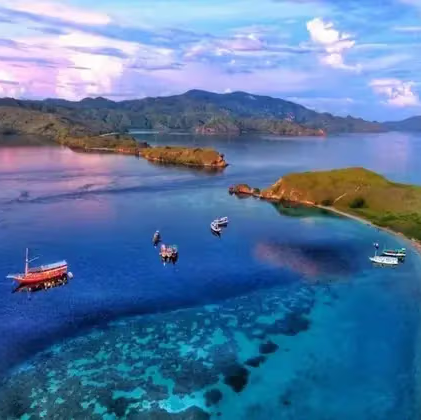
Komodo National Park is a UNESCO World Heritage Site, home to the legendary Komodo dragon, vibrant coral reefs, and the iconic pink‑hued sunrise over Padar Island. The park’s delicate ecosystems are protected by strict regulations; flying a drone without proper clearance can result in hefty fines, confiscation of equipment, or even a ban from the archipelago. The SIMAKSI drone permit not only keeps you compliant but also signals to local authorities that you respect the park’s conservation goals.
FAQ – Your Most Common Questions Answered
Insider note: When I first arrived at Labuan Bajo in 2022, the park rangers greeted my crew with a warm smile because we showed our SIMAKSI permit at the entrance gate. That simple piece of paper opened doors to secluded spots where the sunrise paints the sea a molten gold, and the silence is broken only by the distant call of a white‑crowned pigeon.
What is the SIMAKSI drone permit and why do I need it?
SIMAKSI is the Indonesian government’s system for managing access to protected natural resources. The drone permit is a subset specifically for aerial devices. Without it, you are legally prohibited from launching a drone in any part of Komodo National Park, including the marine zones surrounding the islands of Rinca, Komodo, and Padar.
How do I apply for a SIMAKSI drone permit in Komodo?
- Create an account on the official SIMAKSI portal ( SIMAKSI portal).
- Upload required documents – passport copy, vessel registration, liability insurance, and a concise flight plan (date, time, altitude, and target locations).
- Pay the fee via the integrated payment gateway (credit card, bank transfer, or e‑wallet).
- Submit the application and await email confirmation. Processing time averages 7–10 business days.
- Download the e‑permit and print a hard copy to carry on board at all times.
Which areas of Komodo National Park are off‑limits for drones?
The park is divided into four operational zones:
- Zone A (core conservation): No‑fly zone – includes the habitats of the Komodo dragon on Komodo Island and the breeding grounds of sea turtles on Gili Lakon.
- Zone B (tourist corridors): Limited drone use – only with a permit and during designated windows (early morning 06:00‑09:00).
- Zone C (research areas): Requires a separate research permit in addition to the SIMAKSI drone permit.
- Zone D (open water): Generally allowed, but stay below 120 m and respect the 500 m buffer from marine mammals.
Always cross‑check the latest zone map on the MoEF website before departure.
When is the best time of day to fly a drone for wildlife photography?
- Early dawn (05:30‑07:30): The low sun creates a soft golden light that accentuates the texture of the limestone cliffs on Padar.
- Late afternoon (16:00‑18:00): Warm light highlights the turquoise waters around the islands, perfect for capturing the shimmering schools of trevally and the occasional manta ray gliding near the reef.
- Tide considerations: Low tide (often around 09:00 and 18:00) reveals sandbars and tidal pools where tiny nudibranchs and pygmy seahorses appear. Use a tide chart to schedule your flights for maximum visual impact.
What equipment and insurance do I need?
- Drone: Must not exceed 25 kg gross weight. Popular choices include the DJI Mavic 3 Classic (2.1 kg) and the Autel EVO II Pro (1.9 kg).
- Propeller guards: Required for flights near wildlife.
- Li‑Po battery safety kit: Carry fire‑proof bags and a portable charger.
- Insurance: A minimum of US$ 100,000 third‑party liability coverage is mandatory; many charter operators bundle this into their charter agreement.
- Backup storage: Carry two high‑capacity SD cards (128 GB each) and a rugged external SSD for on‑board archiving.
Can I hire a local operator to handle the permit?
Yes. Many Phinisi charter companies, including KomodoExplorer, have dedicated compliance officers who can submit the SIMAKSI application on your behalf. This service usually adds a modest fee (USD 30‑50) and saves you the hassle of navigating the Indonesian bureaucracy. When booking, ask for “drone‑permit assistance” in the charter notes.
How to Secure Your SIMAKSI Drone Permit: Step‑by‑Step
Below is a practical HowTo checklist that aligns with the official process and incorporates field‑tested shortcuts.
-
Gather Documentation (Day 1‑2)
- Scan your passport (biometric page).
- Obtain a recent vessel registration certificate (PDF).
- Purchase a liability insurance policy that lists the drone’s make, model, and serial number.
- Draft a concise flight plan (max 300 words) stating dates, intended islands, altitude, and purpose (e.g., “documenting reef health at 20 m depth around Batu Bola”).
-
Create a SIMAKSI Account (Day 2)
- Visit the SIMAKSI portal and click “Register”.
- Use a corporate email address (e.g., @komodoexplorer.com) to avoid spam filters.
- Verify your account via the link sent to your inbox.
-
Upload Files & Fill the Form (Day 3)
- Navigate to “Permits → Drone Permit”.
- Attach the PDF files, ensuring each file is under 5 MB.
- Select “Komodo National Park – Zone B” from the dropdown menu.
- Enter the planned flight dates (preferably within the 2026 calendar year).
-
Pay the Fee (Day 3‑4)
- Choose the preferred payment method.
- Keep the receipt screenshot; the system may request it for verification.
-
Submit & Track (Day 4)
- Click “Submit Application”.
- You will receive an automatic reference number (e.g., SIM‑DR‑2026‑00123).
- Use the “Track Application” tab to monitor status. Expect a “Pending Review” status for 2‑3 days, then “Approved”.
-
Download the e‑Permit (Day 7‑10)
- Once approved, a PDF will be available under “My Permits”.
- Print two copies: one for the vessel’s bridge, another for the park entrance gate.
- Store the digital version on a secure cloud drive for backup.
-
Pre‑flight Briefing (Day 10‑12)
- Meet with your charter skipper to confirm the flight plan aligns with the vessel’s itinerary.
- Review the park’s no‑fly zones on the latest GIS map (available from the MoEF).
- Conduct a safety check of the drone (battery health, propeller condition, firmware update).
-
On‑site Compliance (During the Charter)
- Present the printed permit to the park ranger at the Labuan Bajo gate.
- Keep the permit visible on the bridge at all times.
- Log each flight in a notebook (date, time, location, altitude) – this is required for post‑flight reporting.
-
Post‑flight Reporting (Within 7 days)
- Submit a brief flight log to the SIMAKSI portal (optional but appreciated).
- Include any wildlife observations that may aid park management.
-
Renewal (30 days before expiry)
- Log in to the portal, select “Renew Permit”, and upload updated insurance.
- Pay the renewal fee (USD 120) and download the new permit.
Practical Insider Tips for Flying Drones in Komodo
Pro tip: If your charter itinerary changes, contact the SIMAKSI help desk (support@simaksi.id) within 48 hours to amend your flight plan. Early communication prevents costly re-issuance fees.
- Altitude awareness: The park’s official ceiling is 120 m AGL, but many rangers recommend staying below 80 m when you’re near nesting sea turtles on Gili Lakon. The sound of the rotors can startle hatchlings, so a lower altitude reduces disturbance.
- Weather watch: The monsoon season (November‑April) brings sudden squalls. Use a handheld weather meter (e.g., Kestrel 5500) to check wind gusts; stay under 8 m s⁻¹ for stable flight.
- Battery strategy: In the humid tropical heat, Li‑Po cells lose capacity faster. Keep batteries in a shaded, insulated case and rotate them every 30 minutes.
- Wildlife etiquette: When filming Komodo dragons, maintain a 30‑meter buffer. The dragons’ keen eyesight can detect the faint whir of a propeller, and a sudden approach may trigger defensive behavior.
- Noise management: Choose a “low‑noise” propeller set (available from DJI) to keep the acoustic footprint below 55 dB, which is below the threshold that disturbs most marine birds.
- Legal backup: Always carry a printed copy of the UNESCO World Heritage Convention excerpt that allows scientific and cultural documentation, in case a ranger asks for justification.
Sample Flight Itinerary (3‑Day Charter)
Flight Itinerary
Detailed overview of aerial photography mission coordinates and planned drone activities across islands.
Day 1 Mission
Focus on Rinca and Padar Island for aerial habitat surveys and high-contrast landscape cinematography.
View Details- Sunrise Rinca habitat scan
- Padar twin-bay panorama
- Lens focus at 25mm
- Stay under 80m altitude
Day 2 Mission
Operations at Gili Lakon and Komodo Island covering marine conservation and underwater mapping.
View Details- Turtle nesting surveillance
- Coral reef underwater map
- Low tide drone flight
- Dive team coordination
Day 3 Mission
Final mission segment returning from Komodo Island to Labuan Bajo including cliff side photography.
View Details- Sunrise reef documentation
- Cliff mist atmospheric shot
- Post-flight reporting
- Return to base station
Common Pitfalls and How to Avoid Them
Operational Safety Guide
Essential preparation to ensure compliant and safe drone operations in the park.
Documentation Pitfalls
Missing printed permits may result in denied boarding or heavy fines from rangers.
Flight Altitude Risks
Exceeding altitude limits triggers regulation violations and risks drone confiscation.
Tidal Navigation Hazards
High tide flight impacts benthic organisms; check tide tables to schedule safely.
Insurance Requirements
Inadequate coverage leaves you liable for damage to protected wildlife or property.
Local Cultural Etiquette
Ignoring local customs creates strained relations; greet staff with respect.
Emergency Response Plan
Always keep digital and physical copies of permits stored in a waterproof folder.
The Role of Phinisi Charters in Streamlining the Process
At KomodoExplorer, we view the SIMAKSI drone permit as part of a broader stewardship program. Our Phinisi yachts are equipped with dedicated compliance officers who:
- Pre‑fill the application using vessel data already stored in our system.
- Negotiate with park authorities to secure priority review slots.
- Provide on‑board drone safety kits (propeller guards, fire‑proof bags, spare batteries).
- Offer a “drone‑ready” charter package that includes a qualified drone pilot, insurance, and post‑flight editing services.
By partnering with us, you eliminate the administrative lag and focus on capturing the park’s breathtaking vistas—whether it’s the sunrise over the jagged cliffs of Padar or the silent glide of a manta ray at Batu Bola.
Frequently Asked Questions (FAQ) – Quick Reference
- Do I need a separate permit for underwater drones? Yes. Underwater ROVs require a marine research permit in addition to the SIMAKSI drone permit.
- Can I fly a drone over the Komodo dragons at night? Night‑time flights are prohibited across the entire park.
- Is the SIMAKSI permit transferable between vessels? No. The permit is tied to the vessel registration number you provide in the application.
- What is the penalty for an unpermitted flight? Fines range from IDR 5 million to IDR 50 million, and equipment may be seized.
- Can I bring a spare drone on board? Yes, but each drone must be listed in the flight plan and covered by the insurance policy.
Final Thoughts
Securing a SIMAKSI drone permit is not just a bureaucratic hurdle—it’s an invitation to explore Komodo National Park responsibly, with the respect and reverence that this UNESCO World Heritage Site deserves. By following the step‑by‑step guide above, you’ll enjoy the freedom to capture the park’s dramatic cliffs, crystal‑clear lagoons, and iconic wildlife from a perspective few have witnessed. The combination of proper paperwork, thoughtful timing, and a seasoned Phinisi charter crew ensures that your aerial adventure is both legally sound and unforgettable.
Ready to experience the magic of Komodo from the sky? Book your Phinisi charter with KomodoExplorer today, and let us handle the SIMAKSI drone permit while you focus on framing the perfect shot. Visit our charter booking page now, and start planning the aerial journey of a lifetime.