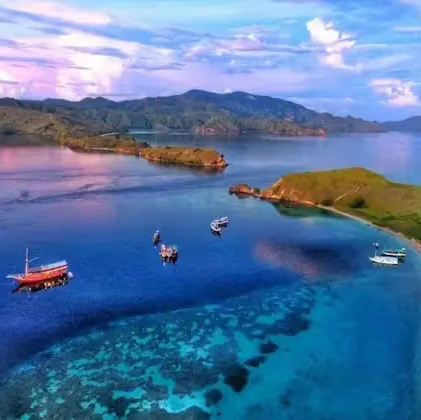
Destination Guide
Suku Bajo & Desa Komodo Village: Maritime Heritage
Key Facts
Essential details about the maritime heritage and Suku Bajo culture.
The Suku Bajo are a seafaring people with a culture woven from centuries of navigation, fishing, and deep reverence for the sea.
You can reach our customer support team by emailing info@yourcompany.example.com, calling +1 555-555-5556, or using the live chat on our website. Our dedicated team is available 24/7 to assist with any inquiries or issues.
We’re committed to providing prompt and effective solutions to ensure your satisfaction.
We offer a 30-day return policy for all products. Items must be in their original condition, unused, and include the receipt or proof of purchase. Refunds are processed within 5-7 business days of receiving the returned item.
Destination Fact
Explore key information about the region.
General
Discover the unique geography and cultural landscape of the region.
Learn More- West Manggarai, Indonesia
- ~1,200 total residents
- Bahasa Indonesia & Bajo
- Fishing & Sea farming
Highlights
Essential travel tips and cultural insights for your upcoming adventure.
Plan Visit- Perahu boat-building
- Komodo Airport 15km
- April-October dry season
- Batu Bolong dive sites
- UNESCO Geopark status
Why the Suku Bajo Matter to Every Traveler
The Suku Bajo (often called “Sea Gypsies”) are not a relic of the past; they are the custodians of a living maritime culture that shapes the very rhythm of the Komodo archipelago.
Their knowledge of currents, wind patterns, and marine ecosystems rivals that of any modern navigator.
For a traveler, understanding the Bajo way of life deepens every sunrise over the Flores Sea.
Anthropologists trace the Bajo lineage to ancient Austronesian seafarers who left the Asian mainland around 2,500 years ago. Oral histories recount a great voyage from the Maluku Islands, guided by the constellations Bintang Padi and Bintang Betelgeuse, that eventually anchored them on the rugged coasts of Komodo. Their settlement in what is now Desa Komodo Village dates to the early 19th century, when a series of monsoon‑driven migrations brought families seeking sheltered bays and abundant reef fish.
Interaction with the Dutch and Indonesian State
During the Dutch East Indies period, the Bajo were recruited as “boatmen” to transport spices between ports. Their expertise in navigating the treacherous Sunda Strait earned them a reputation for reliability, yet also subjected them to heavy taxation. After Indonesia’s independence in 1945, the Bajo community negotiated a special maritime zone that recognized their traditional fishing rights—an arrangement still upheld by the Ministry of Marine Affairs.
Modern Revival
The Heartbeat of Desa Komodo Village
In the last two decades, the rise of eco‑tourism and Phinisi charter operators has sparked a cultural renaissance. Young Bajo artisans now blend age‑old carving techniques with modern design, producing sleek sailing yachts that attract high‑end travelers from Europe to Southeast Asia.
Architecture: The Rumah Lantang
Walking through Desa Komodo, the first thing you notice is the rumah lantang, a traditional stilt house built from mangrove timber. The scent of fresh sea breeze mingles with the aroma of coconut oil used to waterproof the walls, reminding us of the tides nearby.
Boat‑Building Workshops
At the village’s edge, a cluster of perahu workshops hums with activity each morning. Master craftsmen, known locally as tukang perahu, shape hollowed logs into sleek, double‑hull Phinisi vessels. The sound of chisels striking wood is punctuated by the rhythmic chant of workers counting strokes: “Satu, dua, tiga…”. Visitors can watch the process from a shaded platform and even try their hand at carving a decorative prow figure, often a stylized komodo dragon or bajau sea turtle.
Daily Rituals: The Malam Laut Festival
Once a month, under a full moon, the village holds the Malam Laut (Sea Night) ceremony. Lanterns made from dried coconut husk are floated on the harbor, creating a glittering path that mirrors the Milky Way. Elders recite ancient verses invoking Baba Laut, the sea spirit, while children perform a kecak dance that mimics the undulating waves. The ceremony ends with a communal feast of grilled ikan tongkol (tuna) and sate kelapa (coconut satay), the smell of which drifts across the bay for miles.
Education and Conservation
Desa Komodo Village runs a community school that teaches both standard curricula and traditional navigation. Students learn to read bora (wind) and arus (current) using a peta laut (sea map) hand‑drawn on bark. The village also operates a Marine Protected Area (MPA) covering 15 km² of reef, where fishing is restricted to sustainable methods like tangkar (hand‑line) and senggulung (rope trapping). This MPA is monitored by local dive guides who record coral health data for the Indonesian Institute of Marine Science.
Diving Into the Bajo World: Top Sites Near Desa Komodo
Diving Site Guide
Optimize your underwater adventures with our expert site timing and marine life recommendations.
Batu Bolong Essentials
Explore depths of 5-12m to see neon gobies and majestic manta birostris in the early morning.
Manta Point Details
Dive at 10-20m depth during mid-afternoon to encounter manta rays and various reef sharks.
Dragon’s Lair Insights
Perfect for low tide at 15-30m, catch dragon reef fish and elusive pygmy seahorses.
Coral Garden Overview
Shallow 2-8m site best during high tide; enjoy vibrant hard corals and active cuttlefish.
Expert Diving Tip
Tidal windows change current patterns; always check local wind roses to predict plankton surges.
Safety and Precautions
Always consult your dive operator about current strength and site-specific hazards before descent.
Recommended Operators
KomodoExplorer Phinisi Charters offers a 2-day heritage dive package, while Lombok Sea Safaris specializes in night dives at Manta Point. Bajo Eco Adventures provides community-led snorkeling treks at Coral Garden.
Practical Insider Tips for Visiting Desa Komodo Village
-
Ask the Right Questions
- “How does the village manage its MPA?” – Shows respect for conservation and often leads to a personal invitation to a reef‑monitoring session.
- “Can I join a boat‑building workshop today?” – Most craftsmen are eager to share their craft, but they may have a schedule that aligns with tide cycles.
- Timing Your ArrivalArrive mid‑morning (10‑11 am) to catch the pasar (market) where locals sell fresh ikan bakar and kerupuk (crackers). The market buzz is a symphony of vendors shouting prices, children laughing, and the distant clang of boat hooks.
- Dress for the ClimateLight, breathable clothing is essential; however, bring a light rain jacket for the occasional hujan (shower) that can roll in from the sea, especially in November.
- Currency and PaymentsWhile many operators accept USD, the village’s small shops prefer Indonesian Rupiah (IDR). Carrying a modest amount (≈ 150,000 IDR) ensures you can tip the boat‑builders and purchase hand‑crafted souvenirs without hassle.
-
Cultural Etiquette
- Remove shoes before entering a rumah lantang.
- When offered kopi (coffee), accept the first cup; it is considered a sign of hospitality.
- Avoid photographing women without permission; a polite request is always appreciated.
-
Health Precautions
- Bring repellent for nyamuk (mosquitoes), especially during the rainy season.
- Drink only bottled or filtered water; the village’s freshwater source is a small spring that can be brackish after heavy tides.
Frequently Asked Questions (FAQ)
Discover cultural insights and conservation efforts in the Bajo community.
The perahu (traditional boat) is both a livelihood tool and a spiritual symbol. Its double-hull design mirrors the duality of land and sea, embodying the Bajo belief that the ocean is a living ancestor.
You can reach our customer support team by emailing info@yourcompany.example.com, calling +1 555-555-5556, or using the live chat on our website. Our dedicated team is available 24/7 to assist with any inquiries or issues.
We’re committed to providing prompt and effective solutions to ensure your satisfaction.
We offer a 30-day return policy for all products. Items must be in their original condition, unused, and include the receipt or proof of purchase. Refunds are processed within 5-7 business days of receiving the returned item.
Are there any festivals that showcase Bajo culture?
Yes. The Malam Laut (Sea Night) festival occurs on the full moon of each month, and the Bajo Boat Festival—held every August—features a parade of newly launched Phinisi yachts, traditional music, and a communal feast of grilled fish.
What language do locals speak, and will I need a translator?
While Bahasa Indonesia is the lingua franca, many residents speak a distinct Bajo dialect that includes maritime terminology. Most younger Bajo are fluent in English, especially those involved in tourism. A simple greeting in their dialect— “Selamat pagi, Bapa” (Good morning, father)—goes a long way.
Is it safe to swim around the village’s harbor?
The harbor’s waters are generally calm, protected by a coral reef that buffers wave action. However, currents can strengthen during the southwest monsoon (June‑September). Always swim under the guidance of a local guide, especially if you’re unfamiliar with the area.
How to Experience the Suku Bajo Culture in 5 Simple Steps
Book a Phinisi Charter to ensure a cultural itinerary. Arrive early to visit the market and meet local artisans, then participate in a traditional boat building workshop to understand local craftsmanship.
Attend a night ceremony for the lanterns, and leave a positive impact by supporting the community fund. Discover the future of Desa Komodo Village through these respectful interactions.
The community is at a crossroads where modern tourism meets traditional stewardship. Recent initiatives include a solar‑powered water filtration system that reduces reliance on diesel generators, and a youth mentorship program that pairs elder boat‑builders with aspiring designers. By embracing sustainable practices, the Bajo are ensuring that the cultural tapestry of their maritime heritage will remain vibrant for generations to come.
Connecting the Dots: Related Guides
Ready to Sail with the Suku Bajo?
If you are yearning to feel the wind, hear the rhythmic chant of boat-builders, and dive into waters teeming with manta rays, the time is now. Book your bespoke Phinisi charter with KomodoExplorer to experience the living heritage of the Suku Bajo and Desa Komodo. Our crew tailors each itinerary to honor culture and protect the environment.
Reserve your adventure today and become part of the story that continues to sail across the beautiful Flores Sea.